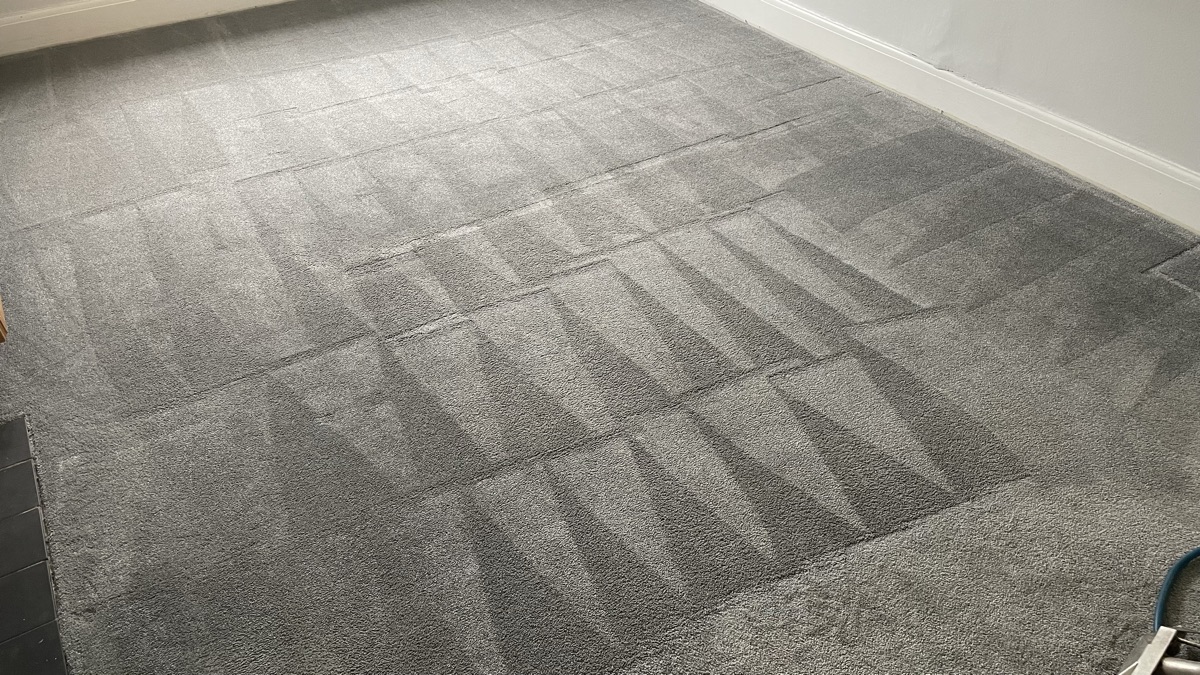
If your carpets are looking tired, you've got two real choices: hire or buy a machine and do it yourself, or bring in a professional. Both can freshen a carpet. The honest answer is that they're not the same job — and which one is right for you depends on the state of your carpet, your budget and how much hassle you're willing to take on.
We've cleaned carpets across Watford and the surrounding counties for over 25 years, so we see the results of both routes all the time — including carpets that have been DIY-cleaned the week before. Here's a straight, balanced look at the difference, with no scare stories.
What "doing it yourself" actually means
DIY carpet cleaning usually comes in two forms:
- Supermarket sprays and powders — handy for a fresh spill or a single mark, and genuinely useful for spot-cleaning between deeper cleans.
- A hired or bought carpet machine — the upright "wash and suck" machines you rent from a supermarket or buy for home use.
These can lift surface dirt and tackle small problems. For a carpet that's only lightly soiled, a careful DIY job can leave it looking noticeably fresher. We won't pretend otherwise.
Where the methods really differ
The biggest difference is depth. A hired machine puts water and detergent onto the carpet and pulls some of it back, but its motor and vacuum are a fraction of the power professionals use. Two things tend to follow from that.
1. Less dirt comes out
Carpet holds grit and grime deep in the pile, near the backing. Professional hot-water extraction — the method we use, sometimes called "steam cleaning" — flushes hot water and solution right into the base of the pile and extracts it back out under strong suction. That reaches dirt a light DIY machine often can't, so the carpet comes up cleaner and stays cleaner for longer.
2. More water is left behind
This is the one that catches people out. A weaker machine leaves far more moisture in the carpet, so it can stay damp for a day or more. That slow drying is the usual reason marks seem to "come back" a few days after a DIY clean — soiling deep in the pile wicks up to the surface as the carpet dries. Our powerful extraction pulls most of the moisture straight back out, so carpets are typically touch-dry in a few hours and fully dry in around 4–6.
If a carpet looks great the day you clean it but greys again within a week, that's almost always a drying problem, not a detergent problem — too much water left in the pile.
3. Getting the chemistry right
Over-wetting and the wrong cleaning solution can leave a sticky residue that actually attracts dirt, so the carpet re-soils faster afterwards. We use professional Prochem machines and Prochem solutions, matched to the carpet, and we pre-treat stains and traffic lanes before the main clean. It's the part that's hardest to get right at home.
Want to know what a proper clean would cost for your rooms? It takes about a minute.
Get my free quoteWhen DIY is the sensible choice
We'd genuinely rather give you honest advice than oversell. DIY is a fair call when:
- You're dealing with a fresh spill — act fast and blot, don't rub. A good spot treatment often does the job.
- The carpet is only lightly soiled and you just want a quick freshen-up.
- You're on a tight budget and the carpet isn't precious or heavily worn.
One thing worth knowing before you hire, though: once you add up the machine, the solution and your time, a DIY clean often costs more than people expect for a result that doesn't go as deep.
What hiring a machine really costs
Hiring a machine from the supermarket looks like the thrifty option — a few pounds for the day. But the headline price is rarely the whole story, and once you add it all up the gap to a professional clean is often smaller than people expect:
- The hire itself — charged per day, usually with a returnable deposit to find up front.
- The cleaning solution — sold separately, and you'll often need more than one bottle for a few rooms.
- Getting it home and back — fuel, parking, and lugging a heavy machine in and out of the car twice.
- Your time — an under-powered machine means slow, repetitive passes, constant refilling, and a good chunk of your weekend gone.
Before you commit to a day's hire, get a free quote for the same rooms. People are often surprised how close the two numbers are once the solution and their own time are in the sum.
There's also a risk the hire price doesn't show. Because a weak machine pulls so little water back out, it's easy to leave a carpet soaked rather than cleaned — bringing the wicking and slow-drying problems above, and on wool or natural fibres it can even cause shrinkage or rippling. That's not a refund; that's a carpet to replace. Knowing which method suits which carpet is exactly the judgement that comes with 25 years' experience.
When it's worth calling a professional
A professional clean tends to earn its keep when:
- The carpet is visibly grey in the traffic lanes or hasn't had a deep clean in a year or more.
- You've got stubborn stains, pet odours or set-in marks that DIY hasn't shifted.
- The carpet is good quality and you want to protect your investment and extend its life.
- You simply don't want the faff of lugging a machine, refilling it and waiting a day for the carpet to dry.
There's a protective angle too. Grit left deep in the pile acts like sandpaper underfoot and wears the fibres down over time. A deeper clean that removes more of it helps the carpet last longer — so it isn't only about looks. You can read more about what's involved on our carpet cleaning page.
Why the cheapest quote can cost the most
If you're comparing professional quotes rather than going DIY, the same principle applies: the lowest number isn't always the best value. Carpet cleaning is a service, not a fixed product, so when a quote comes in far below everyone else it's worth asking what's been left out to get there — usually one of these:
- Proper extraction equipment — cheap kit that can't pull the water back out leaves carpets soaked, with the shrinkage, browning and damp smells that follow.
- Real insurance — we carry full public liability cover. If a cleaner isn't insured and something goes wrong in your home, you've no comeback.
- Background checks — our technicians are DBS-checked, so the person coming into your home has been properly vetted.
- A guarantee that means something — we re-clean free if you're not happy.
A fair price isn't about paying more for the sake of it — it's about paying for the things that actually make your carpets come up clean and stay clean. When you're weighing up quotes, ask each cleaner two straight questions: are you fully insured (public liability)? and is the price all-in, or a "from" price that climbs once you arrive? A quote that's dramatically cheaper than the rest isn't a bargain to celebrate — it's a prompt to ask which of these is missing. It's also why we publish our prices openly, so there are no surprises on the day.
An honest word on stains
No method, DIY or professional, can promise to remove every stain. Very old, set-in or dye-based marks can occasionally be permanent whatever you use — it depends on what was spilt and how long it's been there. The difference with a professional is experience: we'll tell you honestly upfront what we expect to achieve, rather than have you spend money on a hired machine hoping for the best.
The bottom line
DIY has its place for fresh spills and light freshen-ups. For a genuinely deep clean — lifting embedded dirt, tackling traffic greying and pet odours, drying quickly and protecting the carpet — professional hot-water extraction does a job a hired machine can't match. If you're not sure which your carpet needs, just ask. We're a family-run, fully insured and DBS-checked local team, and we're happy to give you a straight answer.
Tell us your rooms and we'll give you a clear, no-obligation guide price — no pressure either way.
Get my free quote